
There is a lot of discontent in the world today. It's got me thinking — has it always been this way?
At the moment, on the world stage, I am reading of all the disputes, wars, conflicts, air strikes, "special projects", genocides. It does feel like the fear factor has been turned up to 10 and that there is a real and present fear that it could all get out of control.
Domestically, there also appears to be a propensity for dispute and polarisation — jump onto most popular social media platforms and you'll be able to find many spats, pile-ons and trolling. Let's also not forget that our politicians are not exactly role models for showing solidarity, either.
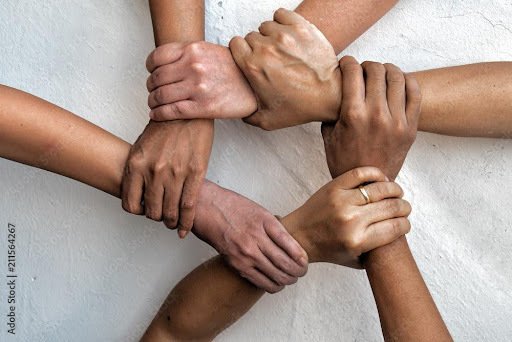
So, we are all scared. And scared people do one of two things: they either draw together, or they pull apart.
Pulling apart feels more immediate, more natural, more satisfying in the short term. Find your group. Protect your group. Define yourself against the other group.
But pulling apart has a cost. And the cost compounds.
I think a lot about what it takes to lead across difference — across political opinion, across lived experience, across identity. It is genuinely one of the hardest things a leader can do, because it requires you to hold space for people whose fears, whose frustrations, and whose sense of what is true are very different from your own.
It also requires you to resist the pull toward simplification. To stay with complexity. To say "it is more complicated than that" when the crowd wants certainty.
Solidarity is not agreement. It is the decision to remain in relationship — with people you disagree with, with communities whose experiences are not your own, with situations that resist easy resolution.
That takes courage. It takes practice. And it takes leadership.
I don't have a solution to the state of the world. But I believe that the skills of inclusion — listening, sitting with discomfort, building trust across difference — are not soft skills. They are survival skills.
For our organisations. For our communities. For all of us.